Balancing Reference Sources In The Learning Commons
What are reference materials?
In a nutshell, reference materials are a variety of multimodal sources that provide background information or quick fact finding on any given topic. Some of the resources we have learned about and explored these past few weeks have been Encyclopedias, Almanacs, Dictionaries, Fact Books, Databases and Indexes, to name a few.
One of the key takeaways I have from this theme is that information is literally EVERYWHERE! from the moment you open your eyes to the moment you go to sleep you are exposed to so much information, it's just overwhelming. It is true that with the fast-changing digital era we live in, we can find anything and everything we want at the click of a button (notice how I use the word want not need), but how trustworthy is the information you find? How can you tell the difference between true and fiction? How can you refine your search so you can find that needle in the haystack (in other words, the information you actually need)? Enter the Teacher-Librarian! I have learned that one of our most important jobs is to train our students and colleagues how to navigate the infinite amount of online and printed resources at our disposal.
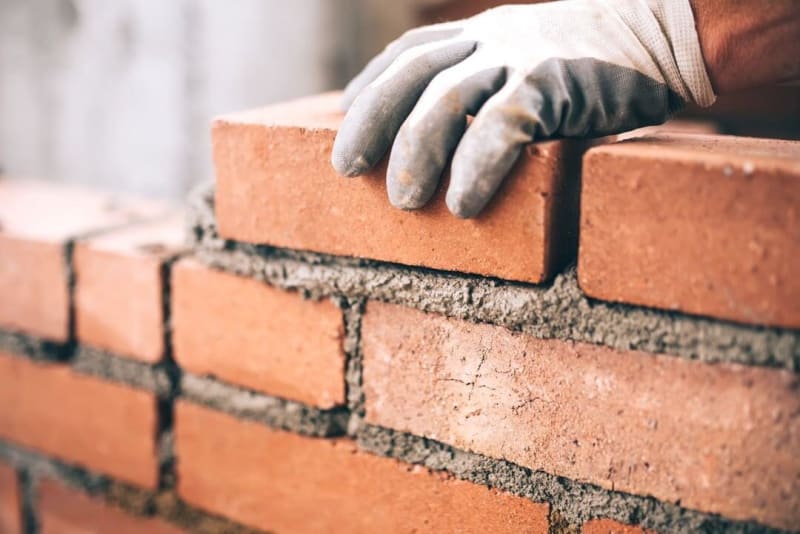
Our job as TLs and classroom-teachers is to help our students lay the foundation for future learning. I remember during one of my first teacher courses at university, we were asked to create a slogan about how we view ourselves as teachers, mine was this “teachers are like masons who work alongside their students to carefully build the strong foundation they need to succeed.” (Vernon, 2004). Teacher-librarians are no exception! through our Learning Commons and the various reference services we provide, our students can become 21st century information-literate individuals.
Theme three made me reflect on the sad state of our reference services at our Learning Commons. I already knew that we had outdated resources (you may recall that our LLC collection had not been weeded for over 10 years prior to my job share partner and I taking over), and how important it is to make sure we purchase new resources. I now know that in order to help our students become information-literate learners, they need to have access to a wide variety of current and trusted printed and digital resources.
Lesson 8: Digital Resources, The Web, and Grey Literature
One of the major takeaways for me during this lesson was that there is so much more information out there than what I originally thought! Can you even imagine that?! We know that if we type for example “water conservation” on google, we get over 600 million entries…imagine my surprise when I realized that this number is only indexed links and that there is so much more within the realms of the Deep Web.
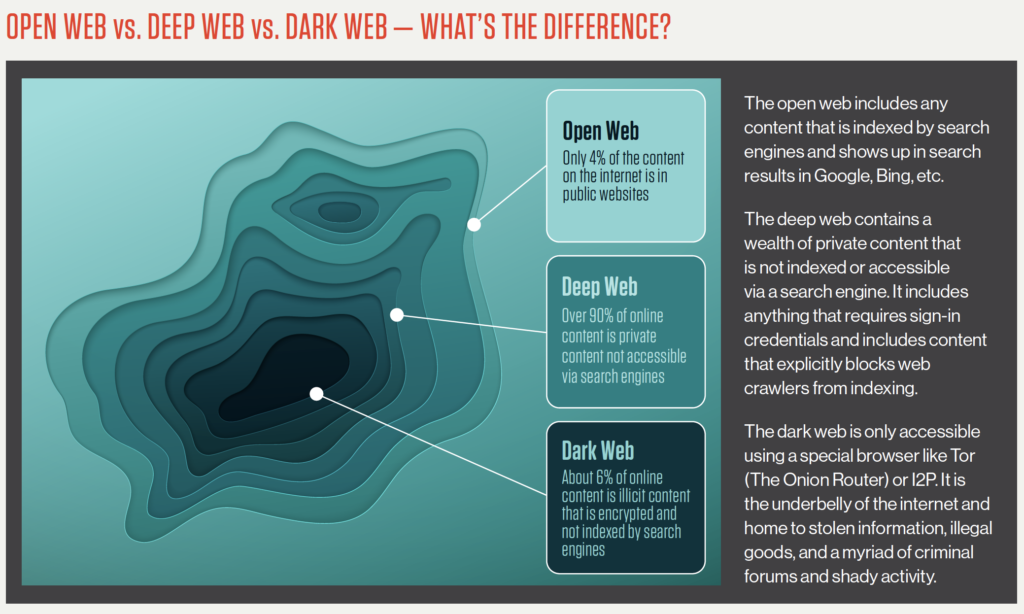
Now we need to make sure we do not confuse the Deep Web with the Dark Web. I know I made that mistake prior to this lesson! There is this misconception that the Deep web and Dark web are one and the same and that is very far from the truth. The Dark Web is usually accessible through special browsers (such as TOR) and a lot (not all of it though) of the information and transactions happening there are illegal. And speaking of TOR, I learned through our discussion group (Thank you Joanna!) that TOR can also be used in the surface web by users who would like to keep their searchers anonymous and untracked.
The Deep Web is everything on the net that “is password protected, paywalled, not indexed by search engines…which altogether account for anywhere between 96% and 99% of the content on the net.” (Crowstrike, 2022) Michael Bergman adds that about “95% of the deep web is publicly accessible information” and that the quality of the content is “1,000 to 2,000 times greater than that of the Surface Web.” (Bergman, 2001). This was such a shock for me! Furthermore, I was not aware that I was already using the Deep web while checking my emails, using the Canvas site to access my courses, buying stuff on Amazon, or even accessing some of our licensed online resources through our district website!
Image Credit Michael Bergman
All of this made me think about the amount of information our students are missing out as well if they do not know how and where to look. While exploring the various websites given by our professor Kristi Oakley, I found some very informative pictographs that I will certainly use to teach my students about the benefits of the Deep Web and some strategies to access it.
One of our classmates, also shared with our group, a very interesting TED talk about the difference between the Deep Web and the Dark web and how we can protect our privacy by using TOR. You can click on the link below to listen to it.
But how do we as teacher-librarians can scale the usage of these resources in a way that is appropriate for our elementary students? What kind of foundational skills do we need to teach them in order to properly equip them to know how to locate the information they need? I can’t wait to learn more strategies to share with my students so they can become information-literate and succeed in this ever-changing digital era.
Lesson 9-13: Resources (Indexes, Bibliographies, Library Catalogue, Encyclopedias, Dictionaries, etc.
One theme that constantly popped up throughout the course was the argument between printed vs. digital sources, and what would be the best choice for our Learning Commons. I completely agree with Riedling that “school librarians have more options (now) than ever before in creating a reference collection that is adequate and appropriate for the school library, community, and students served…at the elementary level, reference instruction continues to use print sources because of the difficulty young children experience in navigating the Internet.” She goes on to say that the “use of print resources decrease as the level of education increases because older students can make effective use of the sophisticated search interfaces and the wide variety of reference resources available online.” (Riedling, 2019) One of the main functions of our Learning Commons is to be able to provide access to as many multimodal resources as we can in order to be able to meet the need of ALL the members of our school community.
Exploring the various databases in both our local library and District website, allowed me to see all the available options we can offer our students and staff. Some of the sources I like to explore further (and show my colleagues and students) are: Kiddle, Wonderopolis, World Book Kids, National Geographic Kids, and Twig Science Reporter to name a few. We are so lucky that our district has purchased subscriptions to a lot of these sources, however, upon talking to my colleagues, I discovered that a lot of them do not know these resources are free to use for them and our students (we can get the passwords by contacting our District TL or through our Learning Commons). This leads me to the question…whose responsibility is it to advertise these valuable sources? Is it the District Teacher-Librarian or are we, as local TLs, are responsible to let our school community know about what is available?
I believe that as part of the reference services we provide in our Learning Commons, Teacher Librarians need to not only promote and engage in 21st century learning skills, but also provide adequate lessons for both staff and students on how to access and navigate these digital sources. Some ways I can think of to promote them might be at staff meetings, during Meet the Teacher Nights, introducing them to our classes during books exchanges, or even visiting classrooms for 5–10-minute presentations.
Another term that really caught my attention is Grey Literature. I was not 100% sure of what it really meant and where we could find it in our learning commons. According to Brian S. Matthews, grey literature “has long been considered the proverbial needle in the haystack. It is commonly defined as any documentary material that is not commercially published and is typically composed of technical reports, working papers, business documents, and conference proceedings.” (Matthews, 2004). He goes on to add that these ephemeral items are hard to catalogue due to the fact that they have limited indexing, minimal to no editorial control and their availability is usually marred with uncertainty. Our Learning Commons does not have a designated area for this type of resources. I also went to our local library to look for them and could not find them either, which leads me to believe that this type of resource might be better stored as a digital source.
One last thing I found very intriguing was the discussions surrounding Wikipedia. As we all know, Wikipedia is a free online encyclopedia edited by the internet community. I will go as far as admitting that it is our first step in the research process. Katherine Maher, the former CEO of the Wikimedia Foundation, makes some very interesting points about the use of Wikipedia and why (even though it is highly discouraged and somewhat tabooed in educational institutions) it is trusted worldwide. She states that there are many different truths out there and Wikipedia is a way to work together (as a community) to merge these facts and learn great things while doing it. Chris Harris adds that “it would be much more productive to teach colleagues, students, and parents how to best use Wikipedia. Instead of appearing to be “behind the times” when it comes to new information sources, librarians can foster educated, high-end users who verify Wikipedia entries using the history and discussion tabs.” (2007)
So, what can we do as TLs to teach our school community to effectively use Wikipedia? We can start by teaching them the three golden rules:
1)At least three sources are required to verify research.
2)General encyclopedias like Wikipedia are a great place to get started, however…
3)Serious research projects cannot cite general knowledge encyclopedias.
Harris, C. 2007
This theme has touched on so many valuable resources, both in print and digital. I can now truly understand the value of having a variety of sources in our Learning Commons. I know cost is a major deterrent in acquiring everything we need. Once again, we need to work our magic to be able to raise awareness on the importance of having a well-equipped library to meet the needs of our 21st century learners as well as obtaining the funds needed to maintain it.
I have learned so many things I did not know before, including Grey Literature, the Deep Web vs. the Dark Web, and the importance of keeping up with the times and instead of forbidding the use of online encyclopedias like Wikipedia, we need to teach the skills needed to navigate them successfully. I continue to be humbled by everything I am learning on this Teacher-Librarianship journey; one thing I know for sure…no task is too big or too small for a TL, Teacher-Librarians are definitely needed!
Until next time,
The Duchess of Bookington
Works cited:
Bergman, M. (2001) White Paper: The Deep Web: Surfacing Hidden Value. Journal of Electronic Publishing. www.researchgate.net
Mathews, B. S. (2004). Internet Resources: Gray literature: Resources for locating unpublished research. College & Research Libraries News, 65(3), 125–129. www.doi.org/10.5860/crln.65.3.125
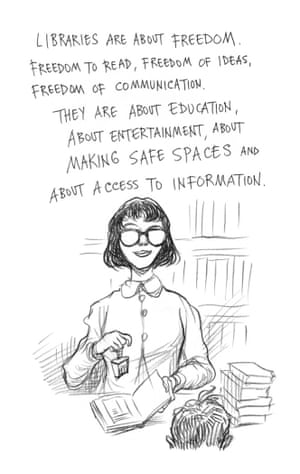
For years, I thought it was a person who loves books, loves reading, and will always know the answers to your questions or at least where to find them in a book. The Oxford dictionary defines a librarian as “a person who is in charge of or works at a library.” (Oxford, 2023) On the other hand, The Collins Dictionary defines them as people “who are in charge of a library or have been trained to work in a library.” (Collins, 2023). To be honest, these definitions are so vague it really makes you wonder if people outside of the profession actually know what the role of a librarian is. Even as a teacher, I never fully grasped the true role of a teacher-librarian until I decided to become one and started learning more.
But what does this role really entail? To be honest, I am still learning, and it never ceases to amaze me how many hats this profession holds. Through my courses, LIBE 467 included, I have learned that a teacher-librarian is:
• The heart of the school: the learning commons and its teacher librarian are like the kitchen in a house, where everyone gathers to experiment, learn, and relax. Their job is to make sure their library is a welcoming place where everyone will feel safe not only to learn but to be who they truly are.
•The person in charge of making sure everyone has equal access to resources: as teacher librarians, our job is to ensure our students’ learning needs are met. We need to provide a variety of multi-modal resources so everyone has a chance to succeed.
•An advocate of equality and freedom: as teacher-librarians, it is our job to make sure we provide a variety of points of view so our patrons can make informed decisions. We are in charge of helping them develop critical thinking skills in this digital era where they have access to an infinite number of resources at the click of a button.
Theme 2 has also taught me that a Teacher-Librarian is a reference advisor (a resource guide), a collection curator, a 21st-century online expert, and a budget allocator. I’m sure that as I continue on my learning journey, I will learn of many more roles TLs have within our school community…if that’s not a superpower I don’t know what is!
Lesson 5: Cooperative Planning – Why Collaboration is Important
As I continue to read through the lessons and weekly discussions, one thing keeps coming up and that is the importance of collaboration in teacher-librarianship. I can now see that this role functions best when there is open collaboration amongst teachers, administration, students, and the whole school community.
Riedling explains the importance of collaboration through the “reference interview.” She states that teacher-librarians can strategically determine what the students want by conducting one-on-one reference interviews, “a conversation between the school librarian and the student for the purpose of clarifying the student’s needs and aiding in meeting those needs.” (p89) As an interviewer, the teacher-librarian’s primary role is to determine “efficiently and productively” the student’s information needs in terms of “the nature, quantity, and level of information the student requires, as well as the most appropriate format.” (Oxley, UBC 2023) She also states that this process is “an essential part of reference services and a major function of all school librarians.” (p89). But how can they achieve this? How do they know if the reference interview was successful?
Furthermore, Riedling tells us that in order to effectively conduct reference services, the teacher-librarian should not only be familiar with both print and digital resources in the collection, but they should also possess great communication skills and be competent at evaluating, organizing, and selecting resources based on their school community’s needs. She also states that the success of the reference interview is not only whether or not the student got the resource they needed, but also how they felt during the process. If they felt that they were given adequate attention as well as accurate resources, then Riedling says that the interview was successful.
The Canadian Library Association, on the other hand, sees the teacher-librarian as the facilitator of collaboration among teachers, students, and the school community. Their document Leading Learning states that the TLs have the role of “facilitating collaborative engagement to cultivate and empower a community of learners.” (p8) The focus here is more on teachers, students, and teacher-librarians working together to learn, rather than just being led to the right resource.
During one of my courses this past semester, I was introduced to the infographic made by the Surrey Teacher-Librarian Association. I find it very useful because it summarizes what Teacher-Librarians can do to foster a collaborative culture in our learning commons and school community. The document also states that the success of the learning commons, and its ability to deliver the services and programs available, “require a higher degree of collaboration” and communication among the Teacher-Librarian and the school community as a whole. (BCTLA, 2019)
Teacher-Librarians also have the responsibility of managing and developing the collection. Riedling describes collection development as “the process of systematically building library collections to serve, study, teach, research, and meet other needs of students and teachers. The process includes the selection and weeding of current and retrospective materials, the planning of strategies for continuing acquisition, and evaluating collections to determine how well they serve user needs.” (p15) She also states that the effectiveness of a collection can be better achieved if the teacher-librarian works collaboratively with key players such as admin, classroom teachers, students, district staff, and the community. Again, Collaboration is seen as a key element in teacher-librarianship.
Other key elements we must mention are time and budget. During our group discussion, I discovered that I am not alone and others share the same feeling of frustration when it comes to time and money! Teacher-Librarians already have so much on their plates, trying to run an effective 21st-century Learning Commons that just adding the thought of also becoming community leaders and advocates for our students with the little time and depleting budget we have, seems almost like an impossible task to achieve.
Riedling states that in order to have a collection that is useful for everyone, “an active and continuous program of weeding must be maintained.” (p17) My job share partner and I have been trying really hard to continue to take time for weeding, even if at times we do it a small shelf at a time due to having to add more prep blocks to our schedule, or having to step in as classroom teachers due to staff shortages. Time to collaborate is also hard to come by!
Empowering Learners: Guidelines for School Library Media Programs states that “the school librarian collaborates with the teaching staff to develop an up-to-date collection of print and digital resources in multiple genres that appeals to differences in age, gender, ethnicity, reading abilities, and information needs.” (AASL, 2017). We certainly have had to be very creative in finding time to talk to our colleagues to see what resources are working and what they would like to see in the SLLC. Talking with students, on the other hand, is a bit easier since we see them in the hallways or at the learning commons more often.
Image Credit: World Book Encyclopedia
The reference collection also needs time and funds to be able to be supported appropriately. We know that our job is to make sure that we are meeting the needs of our students and staff by providing access to various multimodal sources. These can be very costly! A set of printed encyclopedias can cost over $1,000. We also need to take into account that “print encyclopedias should be replaced every five years as the information becomes outdated.” (Riedling, 2019)
When it comes to online resources, we are lucky that our school district has paid for online subscriptions to resources like World Book Kids, National Geographic, Helix, Curio, and Learn 360 to name a few. Each year, TLs are provided with a list of usernames and passwords to access all these online resources; again this is great! However, this also requires the teacher-librarian to teach staff and students how to gain access. My job-share partner and I have taken time during staff meetings to present one resource at a time, so we do not overwhelm our teachers. We have also offered to come and show classes how to access these at home. Ideally, we would like to collaborate with classroom teachers during projects so we can show students (and teachers) the benefits of having access to these amazing resources. As K. Oxley suggests, it is the teacher-librarian’s “responsibility to ensure that a resource is used and used well in an ongoing way. In order to ensure effective spending of budgets, it is essential that the entire collection be used on a regular basis by students and teachers, and this includes the reference section.” (Oxley, 2023)
Lesson 7: Evaluating Information Services
Image Credit: Creative Commons
Evaluation of a library service is not as simple as stating what is working and what needs improvement. It is more complex than that. Riedling asserts that in order to provide top-quality resources and reference services, a teacher-librarian must be aware of the needs surrounding their school community and be able to select, organize, and evaluate resources that will meet those needs.
Evaluating reference services (as well as the entire collection) is important because it allows the teacher-librarian to be fully aware of how much and how well references and reference services are used by members of the school community. (UBC, 2023)
According to K. Oxley, the following steps must be included in any evaluation of reference services:
•A statistical evaluation (raw data) of how much the reference materials are being used
•A satisfaction survey from all patrons using the services.
•An evaluation of the Teacher Librarian’s role after delivering the reference service
•Peer evaluations
•Administrative evaluations of the library program as a whole
•Self-reflection/self-evaluation
(Theme 7 LIBE 467, UBC, 2023)
This theme has touched on yet another layer in the teacher-librarianship job. It never ceases to amaze me how much difference we can make in our school community through collaboration, effective management of the collection, and evaluations of the reference services. I continue to be humbled by everything I am learning on this Teacher-Librarianship journey; one thing I know for sure…no task is too big or too small for a TL, Teacher-Librarians are definitely superheroes!
Asselin, Marlene, et al. Achieving Information Literacy Standards for School Library Programs in Canada. Canadian Association for School Libraries, 2003.
Geographical sources are considered an integral component of any school library collection. They provide information about places such as historical data, location, weather, topography, name places, etc. Riedling defines Geography as “an interdisciplinary science. (This) subject encompasses an interdisciplinary perspective that allows the observation and analysis of anything distributed in earth space and the development of solutions to problems based on such analysis.” (Riedling, 2019). Thanks to the internet, our world has quickly become a global society giving us access to a lot more information than we use to have at our fingertips, this has also given our students the opportunity to explore places beyond their immediate community, making geographical sources a necessity. As Teacher Librarians we “will find that there are as many reasons for consulting geographic resources as there are students in the school.” (Riedling, 2019). Although the internet has made it easier to access online geographical sources, it is still important to house print sources in our Learning Commons.
The following report will evaluate the Historical Atlas of British Columbia and the Pacific Northwest by Derek Hayes.
Community Context:
Prior to beginning the evaluation, it is important to mention the audience this source is intended for. Laity View Elementary is located on the traditional territory of the Katzie First Nation and Kwantlen First Nation (Maple Ridge, BC). It is a K-7 dual-track school with a school population of 619 students from various nationalities. Laity View is considered the 2nd largest school in our district due to the fact that it runs both a French Immersion and an English Immersion program. Considering the size of our school and the additional funding from the French Immersion program, our school has approximately $6500 allocated to our Library Learning Commons for the current school year. A portion of these funds will be used towards replacing a few of our outdated reference sources with other works which will align better with our current B.C. Curriculum Learning outcomes, especially the section on Indigenous Histories in our region. Moreover, the new sources will also contribute towards achieving one of our school’s long-term goals of integrating First Nation perspectives into our lessons.
Our Library Learning Commons houses a rather small section of reference materials situated in a corner under one of our front windows. The sources range from a newly acquired Atlas of the World (2019) to our Atlas de Merveilles (1979). Most of our online references are found on the district website under the “Students” tab.
Reference section at Laity View Elementary
Image credit: Karla Vernon
Part 1: Evaluation of a Significant Reference Resource
The source I have decided to evaluate for this assignment is the Historical Atlas of British Columbia and the Pacific Northwest, by Derek Hayes. Looking critically at this source will shed some light on the state of our reference section and will answer some important questions regarding relevancy, currency, curriculum connections, and whether or not the source merits a place in our Library Learning Commons.
Image credit Karla Vernon
Image Credit Karla Vernon
Carol Singer states that “selecting the highest-quality appropriate reference materials for a collection is one of the most important functions of managing a reference collection…almost all books of reference possess defects as well as merits; it is difficult indeed to find one that is perfect…as the curriculum changes, the academic library must respond by adding new reference materials that will meet these new needs.” (Singer, C. 2012 p.45). Keeping this in mind, I decided to begin my evaluation by applying the MUSTIE technique mentioned by Riedling and Houston in Reference Skills for the School Librarian: Tools and Tips.
MUSTIE chart created by K. Vernon
The next step in my evaluation process was to take a closer look at the resource. Riedling and Houston state that “by using appropriate evaluation tools and criteria, the school librarian is better able to judge whether a particular source meets the needs of the student population.” (Riedling & Houston, 2019 p.23). Thus, after carefully reviewing the various rubrics found in Standards for School Library Programs in Canada and the criteria set by Riedling, I have created a rubric which includes the following categories:
1)Accessibility: whereabouts is the resource located? Can it be accessed by all learners? is the content age appropriate? Is the reading level appropriate for the intended audience? Does the resource meet the diverse learning needs of our school community?
2)Accuracy: are the maps drawn to scale such that accurate comparisons may be distinguished between a verbal scale and a representative scale? Is the map legend easy to read? Is the content accurate? Is the geographical information up to date?
3)Authority: is the resource published by a reputable publisher? Is the resource published by an unknown or smaller publishing company? If so, are there other works from the same publisher that can be checked out? Any reviews?
4)Currency: is the geographical information up to date? If used as a historical resource, is the information too obsolete or inaccurate?
5)Format: does the page layout make it easier for the reader to find information? Are the illustrations and maps clear, appropriate, and functional for the intended audience? Does the layout take into consideration the various learning needs of students?
6)Curricular connection: is the resource connected to the current learning outcomes, big ideas, curricular competencies, and content covered in the BC curriculum? Does the resource support the rationale and pedagogy of the BC curriculum?
7)Objectivity: is the content presented in an objective/unbiased way? Is there any content that has been excluded, changed to paint a different picture, emphasized or deemphasized?
8)Indexing: does the resource provide an easy-to-follow index? Does the index provide references to maps showing features such as latitude/longitude/grid information? Is the index in alphabetical order?
9)MUSTIE score: how well does the resource score on the MUSTIE scale?
Evaluation Rubric: Historical Atlas of British Columbia and the Pacific Northwest, by Derek Hayes
Accessibility: Emerging 1 out of 3
Although the resource is available on loan for a week by anyone who wishes to sign it out, it is very difficult to find without the help of the teacher-librarian. You have to physically take students to the section to find it. Furthermore, due to the layout of the Atlas, not every learner will be able to use it independently.
Accuracy: Emerging 0 out of 3
Even though this is a historical atlas, and some information is correct, it is considered outdated as it is written from a colonialist perspective, there is no mention of First Nations’ perspectives throughout the resource. There is no scale to show whether the maps have been drawn to scale, the legend is also missing or hard to find.
Authority: Developing 1 out of 3
This resource was published by Cavendish Books Vancouver, a small local publisher (this is a plus). However, I had trouble finding a lot of reviews or other reputable work published by them.
Currency: Emerging 0 out of 3
The atlas was published in 1999 and revised in 2000. Even though it is a historical atlas, it is still outdated, also some information is obsolete as current sources have incorporated First Nations’ perspectives into their content, aligning it to the current BC Curriculum learning outcomes and core competencies. (See figure 3 and 4)
Format: Emerging 0 out of 3
The layout makes it very difficult for our intended audience to find the information they seek without the assistance of the teacher librarian or classroom teacher. The maps are also very small and hard to read. The visual layout is also confusing, making it hard to meet the diverse learning needs of all our students.
Curricular connection: Emerging 0 out of 3
Not only does this resource focus on Colonization and Exploration, themes that are covered in high school (see figure 3), but it also does not consider the consequences experienced through colonization by the various First Nations bands living in that region prior to the Explorers coming to what is now called British Columbia (see figure 4).
Figure 3: BC Curriculum grade 8 Social Studies
Figure 4: BC Curriculum Grade 3 Social Studies
Objectivity: Emerging 0 out of 3
This resource is lacking cultural and indigenous perspectives. Some of the information is very biased and does not align with the new curricular and Content competencies making it inaccurate for adept learning.
Indexing: Developing 1 out of 3
There are two indexes at the back of the atlas. The content index is in alphabetical order, making it easier to find information, only if you know exactly what you are looking for. However, with the help of the teacher librarian or any other adult, the student would be able to find what they are looking for. The map index, however, is not in alphabetical order but rather in a numerical sequence. This makes it hard because you would have to leaf through the whole Atlas, find the map you are looking for, look at the number in the bottom left-hand corner and then find the information in the index. There are way too many steps for the audience this resource is intended for.
MUSTIE score: Emerging 0 out of 3
After applying the MUSTIE weeding technique, the resource rated 6 out of 6, which means it needs to be weeded and replaced by something else.
TOTAL SCORE: 3/27
PART 2: Evaluation and Review of a Potential Replacement Resource
In today’s fast-changing world, teacher librarians are faced with the dilemma of having to choose the resource format that will make the most sense for their school community. Some reference sections have seen a decrease in printed format, our Learning Commons being part of that trend. However, we need to keep in mind that “librarians have an obligation to select and support access to all content on all subjects that meet, as closely as possible, the needs of ALL persons in the school community the library serves.” (Mardis, M. 2016, p239). Furthermore, the CASL states that “the school library provides access to information in all formats, at all levels, and to all members of the learning community. As the quantity of information escalates, the number and variety of information formats expand…the school library plays an important role as a gateway to all information resources. An effective school library provides intellectual and physical access to a wide array of materials and services to meet learning needs, both within and beyond the school.” (Asselin, M. et al, 2006). Keeping this in mind, I have decided on the printed source that I think would be a good addition to our reference section.
The replacement resource is the Indigenous Peoples Atlas of Canada (4 volumes)
Evaluation Rubric: Indigenous Peoples Atlas of Canada
Accessibility: Extending 3 out of 3
The printed version comes in both printed format and online through the publisher’s website. What I like the most about it, is that you can access the information without having to pay a subscription which is excellent when it comes to keeping budget in mind. Having a pdf version will also give us the opportunity to use “read-text” features with some of our diverse learners.
Accuracy: Extending 3 out of 3
The atlas was printed in 2018, and being only 5 years old, the information is still rather accurate. The maps have been drawn to scale and have a colour-coded legend, making it easier for our students to follow.
Authority: Extending 3 out of 3
This atlas was created by the Royal Canadian Geographical Society, published by Canadian Geographic, and funded by the Government of Canada in partnership with Canada’s National Indigenous Organizations. All involved in the creation of this source are reputable and well-known organizations.
Currency: Extending 3 out of 3
The Atlas was published in 2018, according to Riedling “because the world is changing so rapidly, it is of utmost importance that the school library provides up-to-date geographical information. A world atlas that is five years old or more portrays enough obsolete information to be considered only for historical purposes.” (Riedling & Houston, 2019) Since this will be considered a historical atlas, we do not need to worry about the fact that it is now 5 years old.
Format: Proficient 2 out of 3
The layout is very user-friendly. It is also more appealing and can support diverse learning needs (bigger font, if using the online version you can use a read-text feature for struggling readers, etc). The illustrations and maps are also current, colourful, easy to read, functional, and appropriate for most of the intended audience (upper intermediate can use this source independently, whereas the younger audience would need the help of the TL or classroom teacher.)
Curricular Connection: Extending 3 out of 3
The source supports the current BC curricular learning outcomes, big ideas, and content learning standards.
Objectivity: Extending 3 out of 3
The source provides students with an Indigenous perspective on the history of Canada. It is well-aligned with the current provincial curriculum.
Indexing: Extending 3 out of 3
The resource has an easy-to-follow index (it is in alphabetical order). It is very easy to read, and it even provides some images of important words. The volume containing all the maps displays a simple index with map number as well as page number to make it easier for students to find what they are looking for.
MUSTIE Score: Extending 3 out of 3
The source scores 0/6 in the MUSTIE scale. This makes it a good resource to have on our shelves in our Learning Commons.
TOTAL SCORE: 26/27
Conclusion
After careful evaluation of both resources, I highly recommend purchasing the Indigenous Peoples of Canada Set for our Learning Commons at Laity View Elementary. By taking a closer look at the score, you can see that the resource is very user-friendly, and can be accessed both online (the Canadian Geographic website has a link to a PDF version of the set) and by using the print version at the Learning Commons. Furthermore, a good advantage of this source is that it also comes in French (Atlas des peuples autochtones du Canada), this is a key component when purchasing this resource as both our French Immersion Program and English Immersion Program can use it. The current price for the set on Amazon Canada is $94.84, you can also purchase it at both Chapters and Good Minds for $99.99. Furthermore, I would recommend it mostly for intermediate students because of the complexity of the content. However, that is not to say that primary students will not get the opportunity to look at the pictures and maps and read them with the aid of an adult. Although it would certainly be more costly to buy both language sets, it would still be worth the purchase given that the resource would be very useful to continue to achieve our school goal of integrating First Nations Ways of Knowing into the curriculum. Finally, it is of the greatest importance to start replacing some of the existing reference sources in our learning commons, not only because a lot of it is outdated and does not fully support the current BC Curriculum outcomes, but also because having a printed source would help us meet the needs of those students who cannot use online resources. Our school district has been focusing on developing an online reference section for everyone to use, so these printed works will help us continue to provide a variety of multimodal formats to our school community.
References:
•Asselin, M., Branch, J., & Oberg, D., (Eds). Achieving information literacy: Standards for school library programs in Canada. Ottawa, ON: Canadian School Library Association & The Association for Teacher-Librarianship in Canada.
•Canadian, R., Canadian Geographic Enterprises, & Indigenous Resources Collection. (2018). Canadian Geographic Indigenous Peoples Atlas of Canada. Kids Can Press.
•Hayes, D. (1999). Historical Atlas of British Columbia and the Pacific Northwest. Cavendish Books Inc.
“Google can bring you back 100,000 answers. A librarian can bring you back the right one.”
Neil Gaiman
Prior to working as a Teacher Librarian, I had no idea about everything they did for our school community on a daily basis. I was under the impression that they would share their love of reading, do book exchanges, help with a question, and put together book sets for a unit we were studying. Boy was I wrong…These past few years have taught me that I could not have been further away from the truth than the distance between Earth and Neptune!
Perhaps my biased way of thinking stemmed from past experiences with previous TLs. If you have read my previous blogs, you would already be familiar with my predicament. Here is a refresher, as you know, before my job-share partner and I took over our library, we would only be allowed to go in for book exchanges and if we needed books for units we were teaching, we could send an email and presto…our box would be delivered to our classrooms (like magic!).
Furthermore, our library schedule was fixed, with little to no opportunity to access resources at other times besides your assigned slot. Once we took over, we decided to have a hybrid model, where we could assign fixed slots for primary grades (with room to be flexible) and a more flexible schedule for our intermediate classes. Marcia Mardis taught us that having a hybrid model would “allow us to have more responsiveness to changing learning and teaching needs, give us a chance to tailor to student development levels, and give us the opportunity to offer consistent access to the library.” (Mardis, M. 2016 p37). Following this schedule has allowed our students and staff to access the learning commons more, not only for research activities but also for pleasure. Little by little, we realized how much our collection was being impacted by this new influx of people. More research meant we needed to take a closer look at our collection, were our students accessing the right sources? was our collection meeting the learning needs of everyone? We started thinking about ways to “develop a collection that include(d) the materials needed to support such activities…(start) collaborating with classroom teachers to provide integration of the teaching of information skills into the curriculum, and at the same time develop a collection tailored to the needs of (ALL) our students and teachers.” (Mardis, M. 2016) Carol Singer takes it one step further by saying that our job as Teacher Librarians also includes "selecting the highest-quality appropriate reference materials for a collection...(This) is (considered) one of the most important functions of managing a reference collection...not only must the content of the collection be carefully selected, but the person in charge of the collection must constantly reevaluate what should be purchased and what should not be purchased." (Singer, C. 2012 p.45) Say what?! Needless to say, we panicked at first because as new TLs we had no idea what that entailed!…talk about being thrown into the deep end without swimming lessons!
Scheduling sure was an eye-opener for us when it came to really look into evaluating our collection; however the money shot was realizing that not only are we in charge of providing the best resources we can to help our students and staff reach their full potential, but we are also to be the tech gurus of the school, the curators in this digital era, the go-to person for anything inquiry related, and the main advocate when it came to making sure our 21st Century learners have access to all the resources they need to succeed. And here I was thinking that my main job as a librarian was to share my love of reading with my students!!
Mark Ray explains what librarians have had to do to “reinvent” themselves to be able to meet the needs of our school community. He says that due to this fast-changing “hurricane of technology,” we have had to transform ourselves into “information and technology gurus (aka Tech Wizards).” (Ray, M., 2017) Moreover, Melanie Sibley also shares what transformation she has had to go through to be able to help her students become information literate, she says that “as we educate ourselves about something (in this case the evolution of library services), we learned that the difference between perception and reality can be quite different…we are no longer librarians but Librarian Media Specialists, Teacher-Librarians (Literacy Magicians).” (Sibley, M., 2016) Our job is now to provide students with bibliographic instruction. Riesling defines it as “any activity designed to teach students how to locate and use information which goes beyond the physical boundaries of the school library…with the explosion of technologies that exist within, and yet beyond, the walls of libraries today,” TLs need to equip students with the necessary lifelong learning skills needed to excel in this era. (Riesling & Houston, 2019) Wow, talk about a powerful statement!
You can listen to both TED Talks by clicking the links below.
Mark Ray: Changing the Conversations About Librarians
Melanie Sibley: The Evolution of a Librarian
One of the statements that really got me thinking about our job as Reference Gurus is the definition Riesling gives when talking about our Learning Commons, she says that they are “more than books on a shelf, school libraries are (now) places for personal growth and reinvention, for getting help in navigating the World Wide Web, a gathering place for civic and cultural engagement, and a trusted learning environment for building a culture of collaboration.” (Riesling & Houston, 2019).
This really got me thinking…is there such a thing as a magic formula, a trick, or anything that could help us become the gurus we ought to be? What can we do to be able to “help students use library resources to obtain relevant and credible information that meets their needs?” (Riesling & Houston, 2019). Our roles have certainly changed now with the introduction of what I like to call the “Google Ocean of Knowledge,” aka the internet. Since our students have come to depend on it to find all the answers to their questions with just a few clicks, we (TLs) need to then become the trained magicians “with the ability to assist students in extracting the desired data to meet specific informational needs.” (Riesling & Houston, 2019). TLs need to understand that the issue with information gathering today is not related to access or quantity, it has more to do with finding the right authoritative sources and showing our students how to effectively and efficiently use the Internet to gain knowledge.
I am really looking forward to seeing what else I learn this term in regard to Reference Sources. More importantly, how I can become the “Tech Guru” my school community needs. I know that I do not need to be perfect but more of a vessel of information, one of the captains of our ship with the main role of guiding our students through this sea of knowledge and helping them get where they need to go. I will continue to enlist the help of all our teaching staff and the community of Teacher librarians in our District. It does take a village to raise the new generations after all. As Teacher Librarians, we must accept all these changes, not resist them. Students need now more than ever, to be taught information literacy skills. Our Learning Commons have now become key players in “providing resources and instruction for the 21st-century learner to reach the desired learning standards that required students to be fluent in critical inquiry and decision-instruction (in this new digital era).” (Riesling, 2019)
Let’s remember that as the saying goes “Opportunities are like sunrises. If you miss them, they are gone.” Let’s all embrace this new change and do our best to ensure we meet the needs of today’s students by not only carrying out our traditional role of “bringing information resources to learners, but also providing the tools and infrastructure that enable learners to analyze, synthesize, and evaluate resources in ways that demonstrate learning and create new knowledge….” (Binkley, M. & Erstad, O., 2009)
So, is there a magic formula to do all this you ask?
Mardis, M. A., & Phyllis Van Orden. (2016). The collection program in schools: concepts and practices. Libraries Unlimited, An Imprint Of Abc-Clio, Llc.
Mattson, K. (2017). Digital citizenship in action: empowering students to engage in online communities. International Society For Technology In Education.
Miller, S., & Bass, W. L. (2019). Leading from the library: help your school community thrive in the digital age. International Society For Technology In Education.
Riedling, A. M. & Houston, C. (2019). Chapters 3-8: Reference and the school library: An overview. Reference skills for the school librarian: Tools and tips (4th ed.). Libraries Unlimited.
Singer, C. A. (2012). Fundamentals of Managing Reference Collections. American Library Association.