Balancing Reference Sources In The Learning Commons
What are reference materials?
In a nutshell, reference materials are a variety of multimodal sources that provide background information or quick fact finding on any given topic. Some of the resources we have learned about and explored these past few weeks have been Encyclopedias, Almanacs, Dictionaries, Fact Books, Databases and Indexes, to name a few.
One of the key takeaways I have from this theme is that information is literally EVERYWHERE! from the moment you open your eyes to the moment you go to sleep you are exposed to so much information, it's just overwhelming. It is true that with the fast-changing digital era we live in, we can find anything and everything we want at the click of a button (notice how I use the word want not need), but how trustworthy is the information you find? How can you tell the difference between true and fiction? How can you refine your search so you can find that needle in the haystack (in other words, the information you actually need)? Enter the Teacher-Librarian! I have learned that one of our most important jobs is to train our students and colleagues how to navigate the infinite amount of online and printed resources at our disposal.
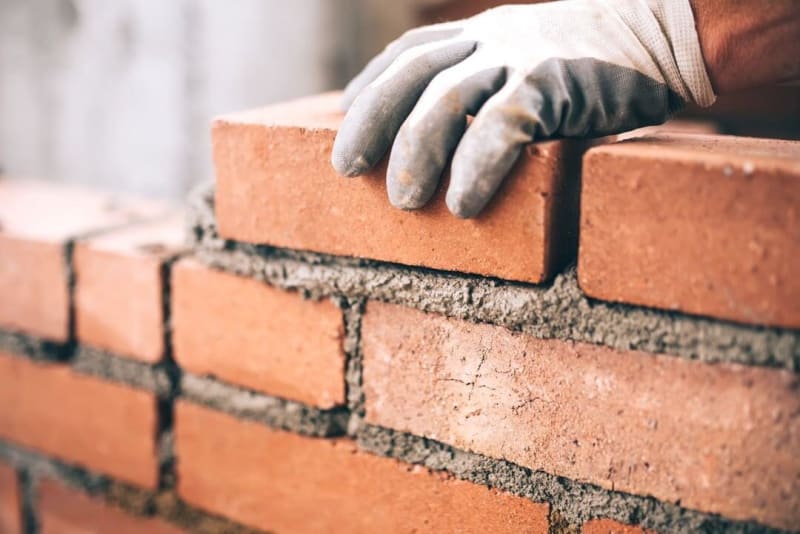
Our job as TLs and classroom-teachers is to help our students lay the foundation for future learning. I remember during one of my first teacher courses at university, we were asked to create a slogan about how we view ourselves as teachers, mine was this “teachers are like masons who work alongside their students to carefully build the strong foundation they need to succeed.” (Vernon, 2004). Teacher-librarians are no exception! through our Learning Commons and the various reference services we provide, our students can become 21st century information-literate individuals.
Theme three made me reflect on the sad state of our reference services at our Learning Commons. I already knew that we had outdated resources (you may recall that our LLC collection had not been weeded for over 10 years prior to my job share partner and I taking over), and how important it is to make sure we purchase new resources. I now know that in order to help our students become information-literate learners, they need to have access to a wide variety of current and trusted printed and digital resources.
Lesson 8: Digital Resources, The Web, and Grey Literature
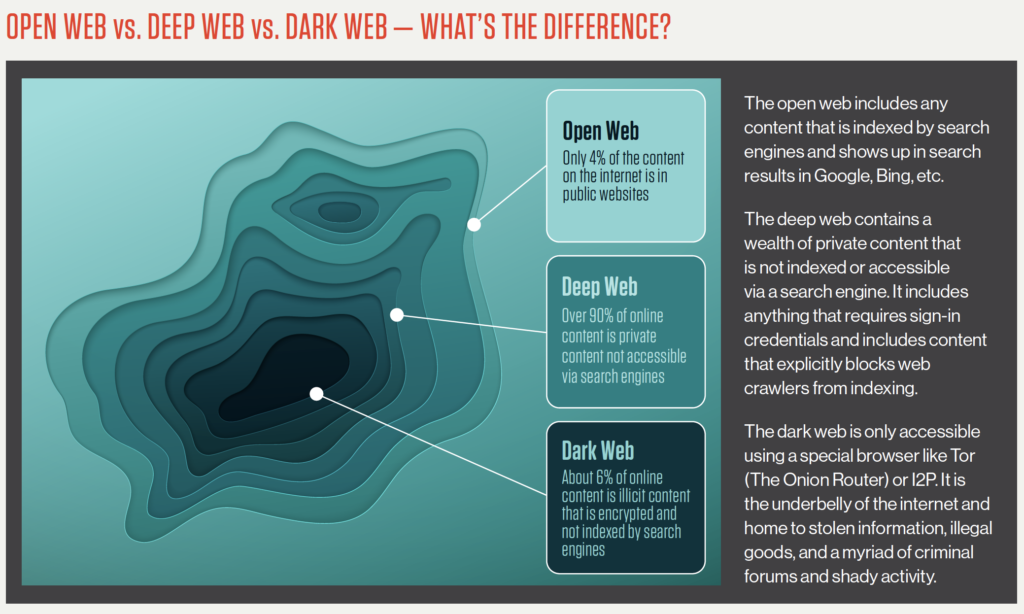
One of the major takeaways for me during this lesson was that there is so much more information out there than what I originally thought! Can you even imagine that?! We know that if we type for example “water conservation” on google, we get over 600 million entries…imagine my surprise when I realized that this number is only indexed links and that there is so much more within the realms of the Deep Web.
Now we need to make sure we do not confuse the Deep Web with the Dark Web. I know I made that mistake prior to this lesson! There is this misconception that the Deep web and Dark web are one and the same and that is very far from the truth. The Dark Web is usually accessible through special browsers (such as TOR) and a lot (not all of it though) of the information and transactions happening there are illegal. And speaking of TOR, I learned through our discussion group (Thank you Joanna!) that TOR can also be used in the surface web by users who would like to keep their searchers anonymous and untracked.
The Deep Web is everything on the net that “is password protected, paywalled, not indexed by search engines…which altogether account for anywhere between 96% and 99% of the content on the net.” (Crowstrike, 2022) Michael Bergman adds that about “95% of the deep web is publicly accessible information” and that the quality of the content is “1,000 to 2,000 times greater than that of the Surface Web.” (Bergman, 2001). This was such a shock for me! Furthermore, I was not aware that I was already using the Deep web while checking my emails, using the Canvas site to access my courses, buying stuff on Amazon, or even accessing some of our licensed online resources through our district website!
Image Credit Michael Bergman
All of this made me think about the amount of information our students are missing out as well if they do not know how and where to look. While exploring the various websites given by our professor Kristi Oakley, I found some very informative pictographs that I will certainly use to teach my students about the benefits of the Deep Web and some strategies to access it.
One of our classmates, also shared with our group, a very interesting TED talk about the difference between the Deep Web and the Dark web and how we can protect our privacy by using TOR. You can click on the link below to listen to it.
But how do we as teacher-librarians can scale the usage of these resources in a way that is appropriate for our elementary students? What kind of foundational skills do we need to teach them in order to properly equip them to know how to locate the information they need? I can’t wait to learn more strategies to share with my students so they can become information-literate and succeed in this ever-changing digital era.
Lesson 9-13: Resources (Indexes, Bibliographies, Library Catalogue, Encyclopedias, Dictionaries, etc.
One theme that constantly popped up throughout the course was the argument between printed vs. digital sources, and what would be the best choice for our Learning Commons. I completely agree with Riedling that “school librarians have more options (now) than ever before in creating a reference collection that is adequate and appropriate for the school library, community, and students served…at the elementary level, reference instruction continues to use print sources because of the difficulty young children experience in navigating the Internet.” She goes on to say that the “use of print resources decrease as the level of education increases because older students can make effective use of the sophisticated search interfaces and the wide variety of reference resources available online.” (Riedling, 2019) One of the main functions of our Learning Commons is to be able to provide access to as many multimodal resources as we can in order to be able to meet the need of ALL the members of our school community.
Exploring the various databases in both our local library and District website, allowed me to see all the available options we can offer our students and staff. Some of the sources I like to explore further (and show my colleagues and students) are: Kiddle, Wonderopolis, World Book Kids, National Geographic Kids, and Twig Science Reporter to name a few. We are so lucky that our district has purchased subscriptions to a lot of these sources, however, upon talking to my colleagues, I discovered that a lot of them do not know these resources are free to use for them and our students (we can get the passwords by contacting our District TL or through our Learning Commons). This leads me to the question…whose responsibility is it to advertise these valuable sources? Is it the District Teacher-Librarian or are we, as local TLs, are responsible to let our school community know about what is available?
I believe that as part of the reference services we provide in our Learning Commons, Teacher Librarians need to not only promote and engage in 21st century learning skills, but also provide adequate lessons for both staff and students on how to access and navigate these digital sources. Some ways I can think of to promote them might be at staff meetings, during Meet the Teacher Nights, introducing them to our classes during books exchanges, or even visiting classrooms for 5–10-minute presentations.
Another term that really caught my attention is Grey Literature. I was not 100% sure of what it really meant and where we could find it in our learning commons. According to Brian S. Matthews, grey literature “has long been considered the proverbial needle in the haystack. It is commonly defined as any documentary material that is not commercially published and is typically composed of technical reports, working papers, business documents, and conference proceedings.” (Matthews, 2004). He goes on to add that these ephemeral items are hard to catalogue due to the fact that they have limited indexing, minimal to no editorial control and their availability is usually marred with uncertainty. Our Learning Commons does not have a designated area for this type of resources. I also went to our local library to look for them and could not find them either, which leads me to believe that this type of resource might be better stored as a digital source.
One last thing I found very intriguing was the discussions surrounding Wikipedia. As we all know, Wikipedia is a free online encyclopedia edited by the internet community. I will go as far as admitting that it is our first step in the research process. Katherine Maher, the former CEO of the Wikimedia Foundation, makes some very interesting points about the use of Wikipedia and why (even though it is highly discouraged and somewhat tabooed in educational institutions) it is trusted worldwide. She states that there are many different truths out there and Wikipedia is a way to work together (as a community) to merge these facts and learn great things while doing it. Chris Harris adds that “it would be much more productive to teach colleagues, students, and parents how to best use Wikipedia. Instead of appearing to be “behind the times” when it comes to new information sources, librarians can foster educated, high-end users who verify Wikipedia entries using the history and discussion tabs.” (2007)
So, what can we do as TLs to teach our school community to effectively use Wikipedia? We can start by teaching them the three golden rules:
1)At least three sources are required to verify research.
2)General encyclopedias like Wikipedia are a great place to get started, however…
3)Serious research projects cannot cite general knowledge encyclopedias.
Harris, C. 2007
This theme has touched on so many valuable resources, both in print and digital. I can now truly understand the value of having a variety of sources in our Learning Commons. I know cost is a major deterrent in acquiring everything we need. Once again, we need to work our magic to be able to raise awareness on the importance of having a well-equipped library to meet the needs of our 21st century learners as well as obtaining the funds needed to maintain it.
I have learned so many things I did not know before, including Grey Literature, the Deep Web vs. the Dark Web, and the importance of keeping up with the times and instead of forbidding the use of online encyclopedias like Wikipedia, we need to teach the skills needed to navigate them successfully. I continue to be humbled by everything I am learning on this Teacher-Librarianship journey; one thing I know for sure…no task is too big or too small for a TL, Teacher-Librarians are definitely needed!
Until next time,
The Duchess of Bookington
Works cited:
Bergman, M. (2001) White Paper: The Deep Web: Surfacing Hidden Value. Journal of Electronic Publishing. www.researchgate.net
Mathews, B. S. (2004). Internet Resources: Gray literature: Resources for locating unpublished research. College & Research Libraries News, 65(3), 125–129. www.doi.org/10.5860/crln.65.3.125
Hello Karla, I have been appreciating how well your blog posts have summarized your learning of the course, and how well you have captured the themes. Laying “the foundation for future learning” is an apt description, and I feel as well is the key to creating strong research skills in our students. That the reference section — physical and digital — can be this foundation indicates how essential maintenance is, and your overview of the resources you have uncovered present an excellent overview of ways in which the TL can engage students. Thank you for your thoughts!
Hi Karla, I too appreciate how well you summarize your learning! This was such a thoughtful capture of all that we have learned this term. And wow, did we ever learn a lot! Thank you!



Hello Karla,
ReplyDeleteI have been appreciating how well your blog posts have summarized your learning of the course, and how well you have captured the themes. Laying “the foundation for future learning” is an apt description, and I feel as well is the key to creating strong research skills in our students. That the reference section — physical and digital — can be this foundation indicates how essential maintenance is, and your overview of the resources you have uncovered present an excellent overview of ways in which the TL can engage students.
Thank you for your thoughts!
Hi Karla,
ReplyDeleteI too appreciate how well you summarize your learning! This was such a thoughtful capture of all that we have learned this term. And wow, did we ever learn a lot!
Thank you!