Inquiry Blog #5: Summarizing and Discussing Phase 2 Topics and Interests

Sitting back to reflect is not something I do lightly. You see, I am the type of person who is always on the go; I pride myself in the fact that I can multitask in my sleep! I guess two jobs, two kids and a husband, extra-curricular activities, and going to school all at the same time does that to you. I mean, I do reflect on a daily basis, but it’s usually in between activities or at the very end of the day when I proudly tick off things I have accomplished from my never ending list of things to do.

For our blog this week, we must look back and ask ourselves, “what new things have we learned from all this exploring we have been doing in the past 4 weeks.” Just thinking about it brings a tsunami of new-found knowledge my way! Phew…now I understand what my students mean when they say “Mrs. Vernon, learning is exhausting!”
As a teacher, I have many times introduced my students to Inquiry-based learning. I love seeing how they get involved in their learning and help each other out. I was so excited to be able to experience it first-hand during my LIBE 477 course this semester. Fast forward to now, and I can say that it has been an exhausting yet very rewarding experience! It sure puts a lot of things into perspective when the roles are reversed and the teacher becomes the student.

Let me give you a quick run-down of what this learning approach entails: Inquiry Based Learning, or IBL for short, “emphasizes the student’s role in the learning process. Rather than the teacher telling students what they need to know, students are encouraged to explore the material, ask questions, and share ideas.” (Wah Chu, 2011.) Recent studies have shown that IBL is very effective in “promoting learning outcomes such as deep thinking, the ability to apply knowledge, and reasoning skills when compared to the traditional didactic approach. (Wah Chu, 2011.).
The video above gives you a quick explanation on how IBL works as well as it shows you an example using the Harry Potter movies, which I had never would have thought to use until I watched this video.
So, what are some of the key takeaways I have acquired these past 4 weeks? Oh…there are plenty for sure but some of them stood out way more than others. I learned how important it is to stay on top of my own ICT learning if I want to be able to help my colleagues expand their own ICT skills. Second, I learned that I need to be more mindful in all the new digital resources I find because not everything is compatible with the devices our school and our students have. Third, I learned that small ripples lead to bigger waves when it comes to promoting a reading culture in our schools. And lastly, I learned how lucky we are to be in a country where I can easily promote a love of reading, not only in my own children, but also in all my students. This was a tough pill to swallow for me, because my heart hurts for all those children in developing countries who do not have the opportunity to explore the fantastic world of the written word. On the plus side, I have learned of ways I can be involved in helping bring books and resources to places where is most needed.
So what has this IBL experience left me with? Aside from a renewed passion to continue to help others embrace the magic of the “written word,” I close this blog post with the “Coles Notes” version of my key takeaways:
1) ICT learning: I’m still nervous about teaching/ helping my colleagues use new digital resources. However, I have learned that it takes a village and that I can enlist the help of others if I need to. I am now a member of various online groups, Facebook pages, Instagram, Twitter, and follow blogs that offer online workshops so I can improve my tech skills and in turn teach others. I have also learned the importance of “keeping an ear to the ground,” to find out what is most needed amongst my staff so I can provide meaningful workshops on Pro-D days.
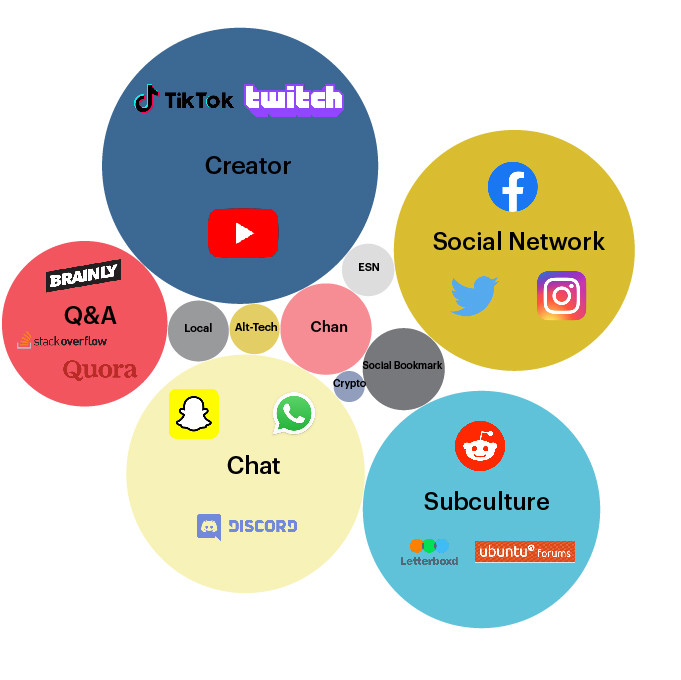
2) Digital Resources: Some of my classmates brought up a very important point that I had not considered before and that is to be mindful of the type of resources I use as they are not compatible with some IT networks or devices. This really made me question if everyone in our school had equal opportunities as far as technology use is concerned. The simple answer to my question is no. In his book “Digital Citizenship in Schools,” Mike Bittle explains that “Not everyone (can) use all the tools that this new digital society provides. Because of socioeconomic status, disabilities, and physical location, these opportunities are not equally available to all students or teachers.” (Bittle, 2015). I now know that I need to be able to try to accommodate, as much as possible, students and families who do not have access to technology.

3) Reading Culture: it was so interesting to learn about what it means to have a reading culture at school. I learned so much from my classmates that week and have started to plan ways I can implement some of the ideas shared. This topic also made me realize that I need to come up with more ideas to help, not only my struggling readers, but ALL my readers. I am excited to say that I have now started to work on creating QR codes to access online read alouds of some of the books we are using at school to give parents and caregivers the opportunity to participate with their kids, even if they do not have the book at home. Here is a sample of a QR code I generated this past week; it links you to a read aloud of “Green Eggs and Ham,” by Dr Seuss. (We celebrated Dr Seuss Day on March 2, 2022)

4) World Libraries: I have to say that this is the topic that really hit home for me. It really opened my eyes when I realized how lucky we are to live in a community where my family and I have access to so many resources, whether it be printed or digital, and that I am able to provide so many resources to my students and have the opportunity to instill a love of reading in every one of them. I was shocked to learn that my beloved country of El Salvador lacks a reading culture, and that reading is seen as only a mean to learn academics and not as a possible leisurely activity. I think that realizing how lucky I am has inspired me to create resources that can be accessed by many, whether they are here in my community or in another country. I sure hope that my vision comes to life by the end of this course, or at least plant the seed that will keep on growing! ( I don’t want to ruin the surprise so I will leave it at that!)
I can’t wait to start working on my Final Vision Project. Although my mind is full of “what ifs” and “oh boys,” I am sure ready to embark on this new adventure...I can’t wait to take you with me on this journey! Stay tuned…
The Duchess of Bookington
References:
Chu, S. K. W., Tse, S. K., & Chow, K. (2011). Using collaborative teaching and inquiry project-based learning to help primary school students develop information literacy and information skills. Library & Information Science Research, 33(2), 132–143. https://doi.org/10.1016/j.lisr.2010.07.017
Free QR maker | Create QR code online - ME-QR. (n.d.). Me-Qr.com. Retrieved March 9, 2022, from https://me-qr.com/qr-code-generator
Grade power learning. (2019, May 28). What is Inquiry-Based Learning (And How Is It Effective)? | GradePower Learning. GradePower Learning. https://gradepowerlearning.com/what-is-inquiry-based-learning/
Living Books - Green Eggs And Ham (Read To Me). (2018). [YouTube Video]. In YouTube. https://www.youtube.com/watch?v=ItPdeUnu5UI
Ribble, M. (2015). Digital citizenship in schools : nine elements all students should know. Eugene, Oregon International Society For Technology In Education.
Spencer, J. (2017). What is Inquiry-Based Learning? In YouTube. https://www.youtube.com/watch?v=QlwkerwaV2E
The Digital Library Resources in Various Media Types and Format... (n.d.). ResearchGate. Retrieved March 9, 2022, from https://www.researchgate.net/figure/The-Digital-Library-Resources-in-Various-Media-Types-and-Format-Planners-View-of-Data_fig6_221911581
Top 100: The most popular social media platforms and what they can teach us. (n.d.). Knightcolumbia.org. Retrieved March 9, 2022, from https://knightcolumbia.org/blog/top-100-the-most-popular-social-media-platforms-and-what-they-can-teach-us


Hi Karla,
ReplyDeleteThank you for sharing and reminding me of the many things I learned but had not thought to mention in my own reflection! I felt like as I was reading yours, I kept thinking, "oh yes, that too!" There really was so much learning that happened over the past few weeks which speaks volumes to the effectiveness of the inquiry based approach. I appreciate how you were able to wrap it up concisely. One of the most practical things I learned is what you also mentioned about recognizing that not all devices are compatible with digital resources we select.
I found the video an interesting way of explaining IBL. I think I am the only teacher who has never read or seen Harry Potter (oh the shame!). I am sure that if I ever get to it, I will be looking for examples of the inquiry based approach!
Rachelle
Hi Rachelle,
DeleteIt's amazing how much new information we have learned so far isn't it? Even now I still go "oh yeah, I should have added that too!" This past week I have found myself questioning if the apps I have chosen for my project are compatible with the majority of devices at school...that has led to more research and finding other apps I could also use! For example, I can use iMovie to create trailers but since the app can only be compatible with Apple devices I have to use another app called FlexClip which will allows android users to see the trailers. So much to be mindful of now!
Karla
PS: oh you should definitely read the HP series! I'm currently listening to the audiobooks with my children when we run errands. I do enjoy the "quiet" car rides now ha!
Hi Karla, Great video!! I think the most important aspect of Dumbledore's Army was also the fact that their learning was of great significance to them. Establishing the desire to learn/investigate the material is, to me, the greatest hallmark of IBL. Now I want to go watch the movies again...
ReplyDeleteExcellent reflection of Phase 2!
Kate
Hi Kate,
DeleteI agree with you! In order for IBL to be successful, our students need to be fully engaged and that can only happened if what they are learning is of true significance to them.
I think for me, I struggled at the very beginning because I had so much info coming my way that i was having a hard time finding what I truly wanted to learn about. Once I found my niche, then I was able to narrow everything down and found myself enjoying the learning process!
Karla
PS: there is no limit on the number of times you can watch the HP movies! I think I have lost count on the number of times I have watch them haha! My daughter's favourite is the Philosopher's Stone so we watch it maybe once a week!
What an excellent synthesis of your learning from phase 2 of our course. Your work is thoughtful and reflective. I appreciate the connections you are making not only to the learning but also to the process.
ReplyDeleteI like how you have really internalized the work of our classmates. I have learned so much from reading others’ blogs and you really summarized it nicely. We have a great resource in each other here! That video on Dumbledore’s Army was a relatable way to explain Inquiry Based Learning- that would be a good one to show at a staff meeting.
ReplyDeleteI loved your phrase, “small ripples lead to bigger waves when it comes to promoting a reading culture in our schools.” That is a great way to be able to visualize the change we are trying to make happen. Sometimes it feels like the small ripples aren’t going anywhere, but in the big picture, it all adds up!