Module 3: Cultivating Life-Long Reading Habits
Reading Levels: A Double-Edged Sword
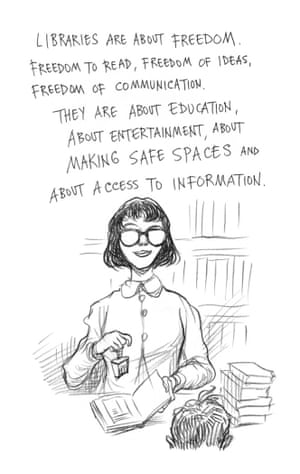
Image credit here.
The readings this week made me reflect quite a bit. I have always loved reading and I will be forever thankful to my mom for instilling that love at a very early age. Some of the best memories I have of my mother involved reading; for instance, I remember sitting on her lap reading the comic section from our local newspaper. I used to love reading “Peanuts, Garfield, and Family Circle.” Of course they were called differently in Spanish as I lived in El Salvador until I was 15, so my early reading years were in my mother tongue.

I also remember reading “Le Petit Prince” at bedtime with her…after she passed away, reading became my escape, and by age 10 I was reading Agatha Christie and Edgard Allan Poe…I was interested in mystery, detective work, paranormal, and horror. My aunt used to sneak in Agatha Christie books for me to read as my dad thought those books were a bit much for a 10 year old…just thinking about that conspiratorial look in her eyes and the subtle winks whenever she would give me a book, brings a smile to my face!
I guess it’s safe to say that they both helped me discover my “reading identity.”(UBC, 2022). I must add that even though my dad was not a fan of Agatha, Poe or even Stephen King, he did not stop me from reading them. On the contrary, he sat down and read his own books next to me and my siblings. Looking back now, I wonder what would have had happened to my love of reading had the grown ups in my life done things differently, would I have hated reading? What they did for me is exactly what Neil Gaiman suggests in his lecture on”why our future depends on libraries, reading and daydreaming.” He says that we “do not need to discourage children from reading the wrong thing. Fiction you do not like is a route to other books you may prefer. And not everyone has the same taste as you.” (Gaima, 2013)

Image credit here
Adults do have a great influence in the readers of tomorrow so we need to be mindful and allow children the freedom to create their own reading identity. In their book “Reading In The Wild,” Kelley and Miller make a good point when they say that “when (adults) promote books to children and share (their) reading lives with them, (they) offer more than another great book recommendation or reading cheerleader: they invite them into a society that reveres reading and readers.” (2013). My aunt and mom did just that, they introduced me to a world where reading is valued and respected. I say respected because they could have very easily steered me towards other books, but instead, they allowed me the freedom to choose on my own, hence taking ownership of my reading identity.
Now that I am a grown up, I have made it my mission to make sure I give every student the freedom to choose what they want to read and to be able to develop their literary identity without us telling them how to do it. It is so sad to discover that some educators and parents only allow their children to choose books at their reading level. I am not saying that this is entirely wrong, only that they need to really look at the research and understand that even though “students should spend most of their time in “just right” books, it does not mean that they should be limited to only those books.” (Parrot, 2017). We need to remember that those reading levels are there for us educators to help us assess our students NOT to label them based on reading level. Furthermore, Pernille Ripp, creator of the Global Read Aloud program, adds that sadly “this is what levels have become-labels that restrict our readers and tell them that their reading identity needs to be based on an outside influence -the teacher- and not their own intuition.” (Ripp, 2010). So what can we do as Teacher-Librarians to help move away from these labels? How can we help our teachers? Parents? We have the tools, so how do we go about using them?
Module 3 has given me an opportunity to explain what are some of the steps I could take if I encounter a situation where a student is being told to only read books at their level. The scenario we are asked to explore is the following:
“A grade two student comes into the library, on his own, to choose books. He is usually an enthusiastic science book fan (insects, tigers, sharks). He looks sad and defeated and says: “My Mom says that from now on I have to have taken out chapter books to help my reading and they have to be a 2.4”.
The scenario above reminds me of what Donalyn Miller says could happen if you limit children’s ability to choose their books based on interest. She says that “while children are learning the skills of reading, they must also develop a positive reading identity or they will not become lifelong readers…removing, defining, limiting, or rejecting children’s reading choices disempowers them and creates negative attitudes toward reading.” (Miller via Parrott, K. article, 2017). Sadly, what this mother is doing (unknowingly) is just the opposite of what she believes will help her child become a better reader.
So what steps could I take to ensure this child continues to take books he is interested in without feeling guilty or afraid that his mom would disapprove?
Step 1: Focus on creating a teachable moment for the child:
Parrott suggest that as Teacher Librarians, our job is to “do our best to ensure our patrons leave satisfied.” (Parrott, 2017). I would talk to the student a little bit to put him at ease again and will ensure him that his love of science is amazing. I would tell him that we actually have a variety of chapter books with science themes in them and would show them to him. I would consider his specific interest and would pick series based on that. Some of the books I would recommend would be:
The Magic School Bus

Image credit here
Calpurnia Tate, Vet Girl by Jacqueline Kelly

Image credit here.
Zoey and Sassafras by Asia Citro
Image credit here
Andrew Lost by J.C. (a great book to read if you like the Magic School Bus)

Image credit here.
After showing him those books and picking a couple, I would still encourage him to take out one or more of the science books he likes to keep in his classroom. We need to remember that the key to keeping patrons satisfied is to provide “more choice, not less…let them take out a lot of books so that somewhere in that pile they find something that satisfies them (and ultimately, mom)” (Parrott, 2017). Furthermore, Gaiman shares that “the simplest way to make sure that we raise literate children is to teach them to read, and to show them that reading is a pleasurable activity. And that means finding books that they enjoy, giving them access to those books, and letting them read them.” (Gaiman, 2013)
Step 2: Approach Classroom teacher to discuss:
I would touch base with his classroom teacher to further find out what type of reader he is in the classroom. Which books does he like to read in the classroom library. I would talk to her about the issue at hand and discuss ways we could bring mom on board. I would ask what the reading dynamics are at home (if she knows them): if mom reads with the child, if a sibling reads with them, etc. Knowing a little bit more about the reading culture at home will help us figure out what next steps to take. Kelly and Miller suggest that classroom teachers and teacher librarians need to “consider how cultural factors affect students’ views toward reading and evaluate how implicit and explicit messages from adults influence students’ reading lives.” (Kelly & Miller, 2013). In other words how does this student’s mother view reading? Is reading seen as a chore or an enjoyable activity?
Speaking to his teacher will also open the door to suggesting if we could set up a meeting with his mom and discuss how we can best help them. If the classroom teacher thinks it would be best for me to discuss with the mom, then I would move onto the next step. Touching base with the family by phone.
Step 3: Set up a meeting with family and invite them on a tour of our library learning commons
This, in my opinion, is a very important step to take. Not only because we could use the situation as a teachable moment for mom, but we are also letting our student know that we are advocating for him and his reading needs. I would start by telling her how much I enjoy helping her son at the library. I would then invite her and her child to come tour our library at their convenience so I can show them the amazing sections we have for them to check out. I would start our tour “by explaining a little about the reasoning behind our decision to organize our collection by book type” (Parrott, 2017) and give them a quick tour of the amazing resources we have at our students’ disposal.
In order to get a better understanding of mom’s reasoning to limit his reading material to only chapter books I would ask questions like “what type of books would she like him to read and why? What type of chapter books would fit that category (fiction/non-fiction)”. Having those answers I would then share with her how sad and disappointed he was at not being able to take out books he is interested in. I would share with her some research on the importance of providing students with the freedom of choice when it comes to reading materials and how this will not only help them improve their reading level, but it will also instill a life-long love of reading. I will also explain how readers are “more likely to pay attention to input when it is interesting (to them.)” (Krashen, 2018). If our students are interested in what they are reading, they will pay closer attention and this in turn will help them improve their spelling, grammar, vocabulary, speech, and overall knowledge of their surroundings. Finally I would let her know that our learning commons lets students pick multiple books and ask if she would be open to do a “test run,” where he could sign out a non-fiction science book along with a couple chapter books. Finally, I believe it’s important that she sees that I validate her concerns about choosing above level books for her child, that I am willing to help in any way I can, and that my ultimate goal is for her child to develop a life-long love of reading.
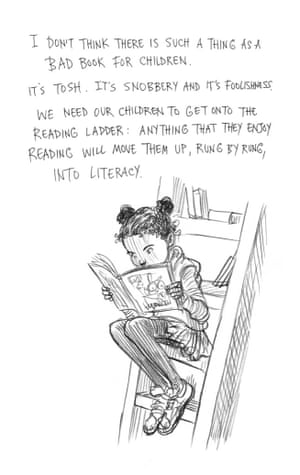
Image Credit here
Step 4: going the extra mile to educate families in our school community on the benefits of freedom of reading choice.
In their book “Reading in the Wild,” Kelly and Miller shared a great list of ideas I could incorporate into our Library Learning Commons to help bring awareness to the benefits of reading for pleasure. Some of the ideas I would like to use are:
1) Create a section in our monthly school newsletter called “Reading Corner” and include a list of reading recommendations for the whole family. I will also extend an invite to email me and place books on hold.
2) Start adding a weekly book recommendation to my email signature and encourage other teachers to do the same so we can reach more parents.
3) Create a bulletin board which will showcase a division every month with what the kids are currently reading or have read in the past week. Kids will love seeing their names on the board and will also see what their friends are reading.
4) Maybe have a weekly trivia question on the announcements and encourage students to come to the library to check out books that could answer the weekly trivia question.
5) Make sure every child has a book to take home. Also let them know about exciting events happening at the local public library or reading contests. Make sure every child takes at least a couple books home for long holidays.
6) Send tips to parents that will encourage ways to incorporate reading into family routines.
The possibilities are endless! The one thing we all need to keep in mind is that it is crucial we spend time with each child helping them develop the skills needed for them to be able to select books independently. Like Parrott says we need to “trust kids when it comes to selecting their own books…they do have opinions and preferences, even if they’re in first grade. They are capable of learning to match themselves to “just right books” without the teacher (or parent) directing them to a labeled bin.”
Do you have any other ideas you would like to share? Have you ever experienced the scenario I discussed in this blog? I would love to hear from you!
Until next time,
The Duchess of Bookington
Resources:
• D’Orio, Wayne (2020) D’Orio, W. (n.d.). Reading Levels Unfairly Label Learners, Say Critics And Then There’s the Research. School Library Journal. https://www.slj.com/story/Where-did-Leveling-Go-Wrong-leveled-reading-lexiles-AR-libraries-books-fountas-pinnell
• Gaiman, N. and Riddell, C. (September 6, 2018). Neil Gaiman and Chris Riddell on why we need libraries - an essay in pictures. The Guardian. Retrieved from: https://www.theguardian.com/books/gallery/2018/sep/06/neil-gaiman-and-chris-riddell-on-why-we-need-libraries-an-essay-in-pictures
• Gaiman, N. (2013, October 15). Why our future depends on libraries, reading and daydreaming. The Guardian. Retrieved from http://www.theguardian.com/books/2013/oct/15/neil-gaiman-future-libraries-reading-daydreaming?CMP=twt_gu (Links to an external site.)
• Gonser, Sarah. (2020) If We Want Bookworms, We Need to Get Beyond Leveled Reading. (n.d.). Edutopia. https://www.edutopia.org/article/if-we-want-bookworms-we-need-get-beyond-leveled-reading
• Kelley, S., & Miller, D. (2013) Reading in the wild: The book whisper’s keys to cultivating lifelong reading habits Links to an external site.. San Francisco: Jossey-Bass. p.88-128 (Book Excerpt)
• Krashen, S. (May 1, 2018). The conduit hypothesis. Language Magazine. Retrieved from: https://www.languagemagazine.com/2018/05/01/the-conduit-hypothesis/ Links to an external site..
• Parrott, Kiera. (2017). Thinking outside the bin: why labeling books by reading level disempowers young readers. Download Thinking outside the bin: why labeling books by reading level disempowers young readers. School Library Journal, 63 (8) pp.42-45


No comments:
Post a Comment